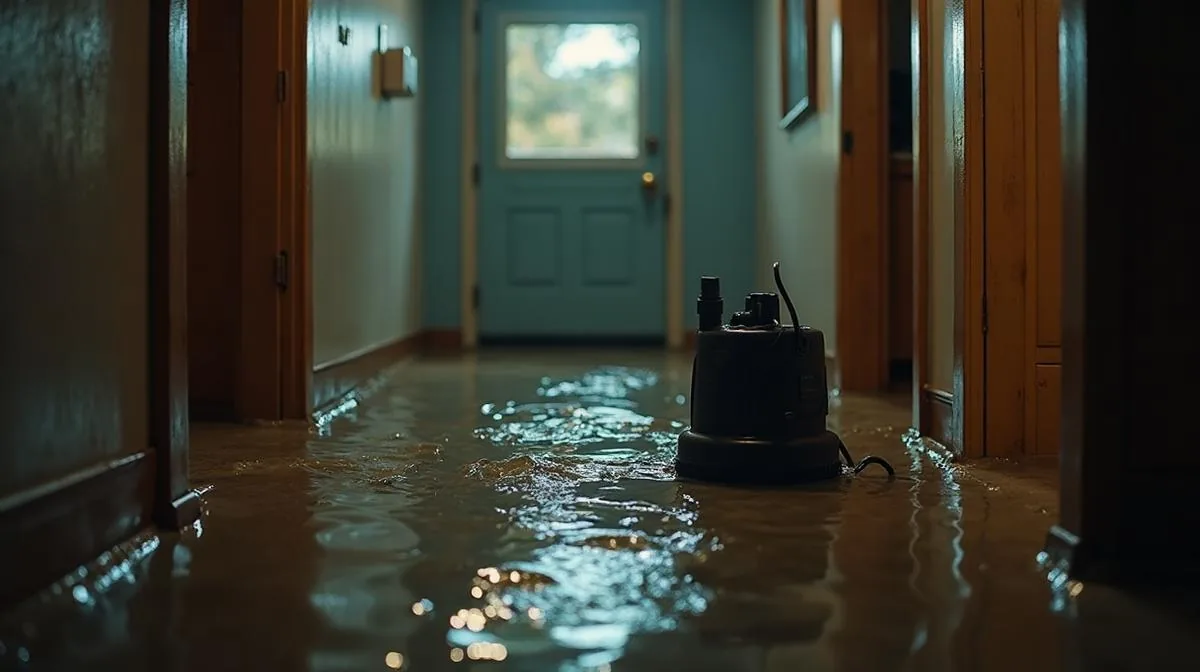
It's 2am, the storm knocked the power out, and now there's water creeping across your basement floor. I get this call every spring and every big storm season here in Livingston County. Take a breath — here's exactly what to do, in order.
Actively Flooding Right Now?
We're IICRC certified for water restoration and answer water emergency calls 24/7.
(517) 300-2445Why Sump Pumps Fail (Usually at the Worst Possible Time)
Around Howell and Brighton, most basements sit on heavy clay soil that drains slowly. When we get a big rain or a fast snowmelt, that water has nowhere to go except toward your foundation — and your sump pump is the only thing standing between it and your finished basement.
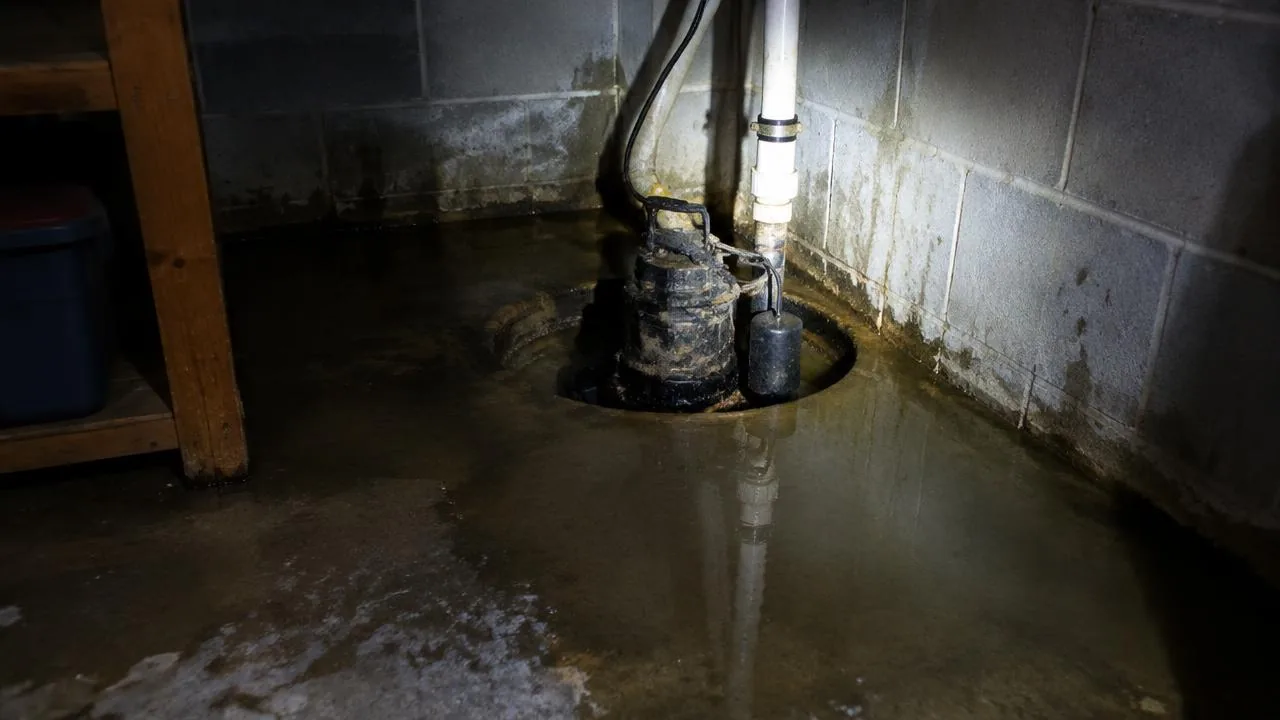
The pump itself usually fails for one of these reasons:
- Power outage. The same thunderstorm dumping 3 inches of rain knocks out your power. This is the #1 cause I see.
- Stuck float switch. Debris or a tangled cord jams the float, so the pump never kicks on.
- Overwhelmed pump. An older or undersized pump can't keep up with a once-a-decade storm.
- Frozen discharge line. Classic Michigan late-winter problem — the line outside freezes, the pump runs, and the water comes right back in.
- Age. Most sump pumps last 7-10 years. If yours is older and has never been tested, it's borrowed time.
Step 1: Don't Wade In Blindly
Same rule as every flooded basement: if water is anywhere near outlets, your electrical panel, a water heater, or a furnace, stay out. Water and electricity don't negotiate. If you can kill power to the basement from a dry spot at the panel, do it. If not, wait for help.
Step 2: Stop More Water From Coming In
If the power is out and you have a battery backup pump or a generator, now's the time. If the discharge line is frozen or clogged, clearing it can get your existing pump working again. Even a working pump doing partial duty slows things down while you wait for us.
Step 3: Call Before You Start Tearing Things Out
Here's a mistake that costs people thousands: ripping out carpet and drywall before the insurance adjuster or a restoration pro documents the damage. Take photos and video first — the water line on the wall, the damaged items, the failed pump itself. Then call us. When we arrive, we take moisture readings and document everything in a format insurance companies actually want to see.
Step 4: The Insurance Conversation You Need to Have
Hard truth: a standard homeowners policy usually does not cover sump pump failure. You need an endorsement called "water backup and sump pump overflow" coverage. It's one of the cheapest add-ons in insurance — but you can't buy it after the water's already in your basement. If you take one thing from this article: call your agent this week and ask if you have it. I wrote a full breakdown in our Michigan water damage insurance guide.
What We Do When We Arrive
As an IICRC-certified water restoration company, we follow the actual industry standard, not guesswork:
- Extract standing water with truck-mounted equipment
- Map the moisture with meters — including inside walls and under flooring where you can't see it
- Remove what can't be saved (soaked pad is almost never salvageable)
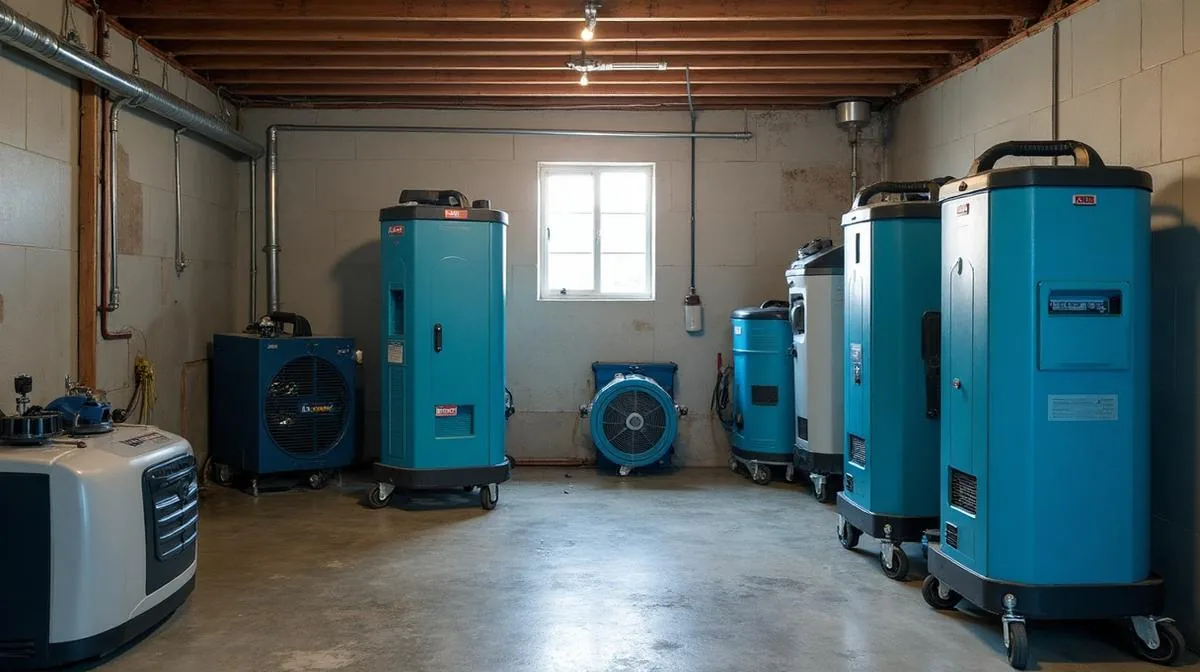
- Dry the structure with commercial dehumidifiers and air movers
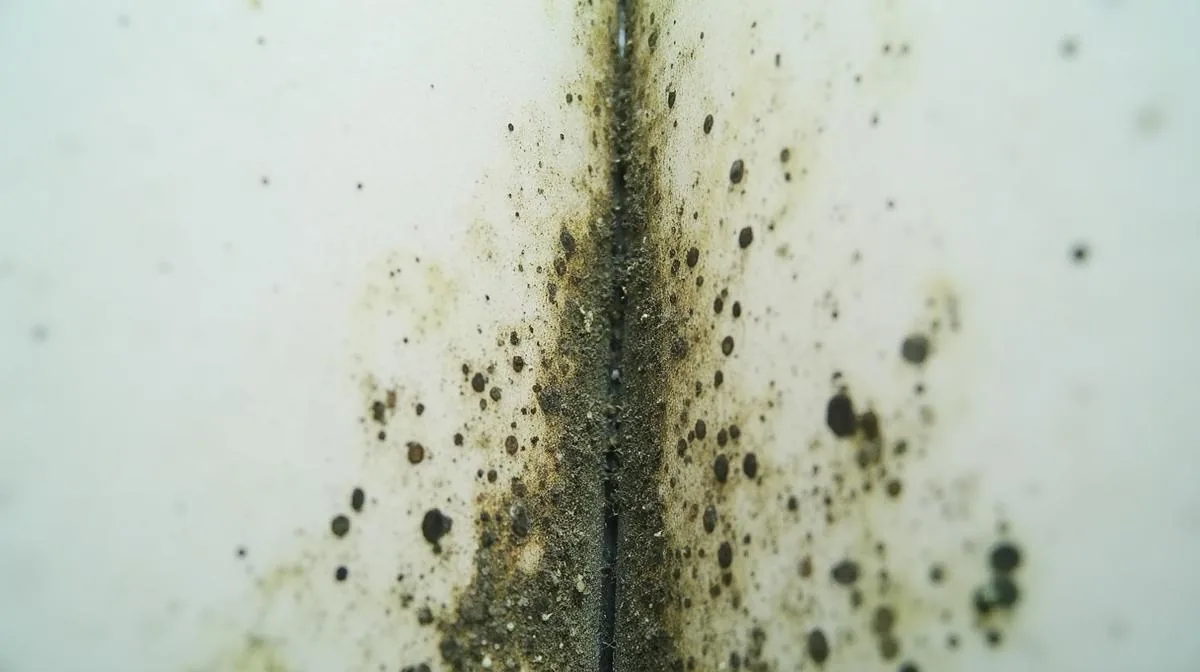
- Verify dryness with follow-up readings before we call it done — this is what prevents the mold call six weeks later
Once It's Dry: Make Sure It Never Happens Again
After we've dried out a basement, most homeowners ask the same question: how do I never go through this again? Battery backup pump, annual test, discharge line check before winter. I put the whole prevention checklist in our sump pump prevention guide.
Water in the basement right now? Call (517) 300-2445. We answer water emergency calls 24/7 across Howell, Brighton, Hartland, and the rest of Livingston County.