If someone asked you what's hiding in your carpet, you'd probably picture dirt, maybe a few crumbs, maybe some pet hair. You wouldn't picture a microscopic ecosystem — but that's exactly what's there, and it's breathing along with you every single day.
In 2026, the conversation around home cleaning has quietly shifted. Homeowners aren't just asking "does it look clean?" anymore. They're asking something harder to answer: "Is the air in my home actually safe to breathe?"
That's not paranoia. That's science catching up to lived experience.
The Carpet Myth Nobody Talks About
Here's what most people assume: if you vacuum regularly, your carpet is clean. Your floors look fine, there's no visible grime — so you're good, right?
Not quite.
Your carpet is functioning as a massive biological filter. Every time someone walks through your front door, it traps pollen, dust particles, pet dander, and microscopic debris from the outside world. That's actually a feature, not a bug — carpet keeps those particles out of the air you breathe. The problem starts when that filter gets full.
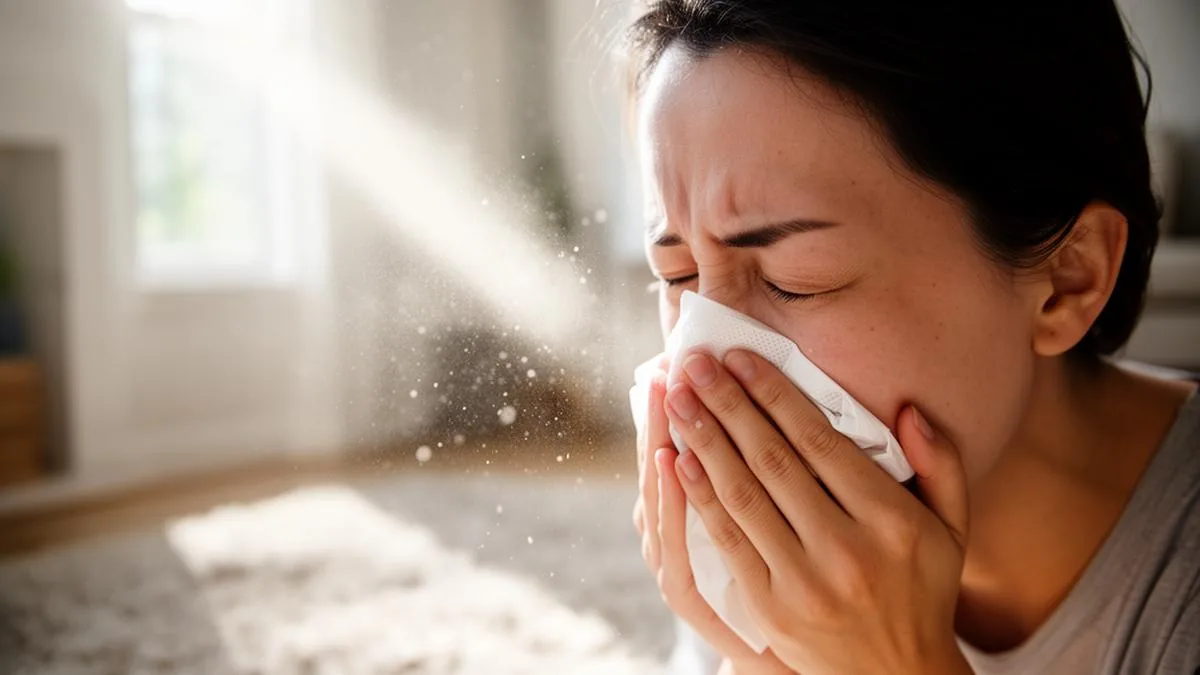
Once carpet fibers are saturated with contaminants, they stop filtering and start releasing. Every footstep, every time your dog runs across the room, every time a child crawls across the floor — particles get kicked back up into your breathing zone. Researchers call this process aerosolization, and it's one of the primary ways indoor allergen exposure happens without anyone noticing.
EPA Indoor Air Quality Warning
According to the EPA, indoor air is typically two to five times more polluted than outdoor air. The EPA's Science Advisory Board consistently ranks indoor air pollution among the top five environmental health risks.
What Standard Vacuuming Actually Leaves Behind
This is where things get uncomfortable, especially if you've been running a vacuum over your carpets once a week and feeling good about it. If you've been wondering whether vacuuming alone is enough, here's the honest answer.
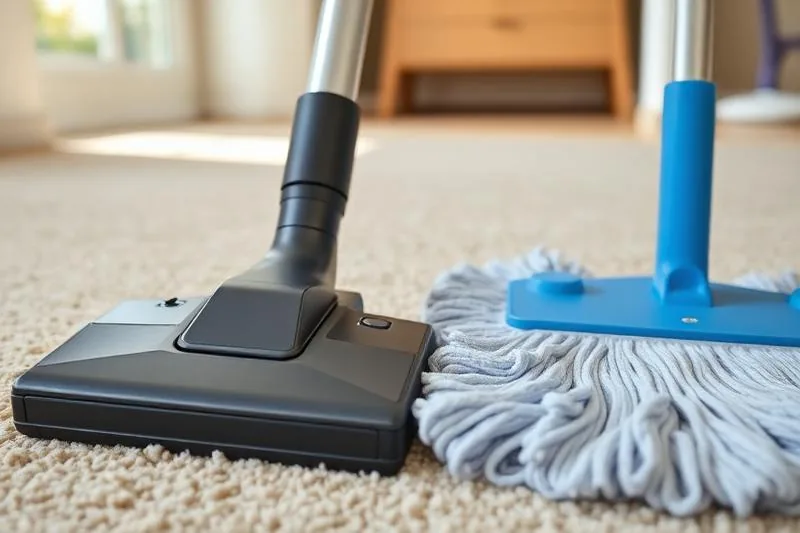
Household vacuums — even good ones — have two fundamental limitations:
- Suction: Standard residential vacuums simply don't generate enough force to pull contaminants out of the deepest layers of carpet fibers and padding. They clean the surface layer reasonably well. What's embedded deeper stays put.
- Filtration: Unless a vacuum is equipped with a true HEPA filter and a sealed system, it's likely redistributing fine particulates rather than capturing them. Some of what you're vacuuming gets briefly lifted, passes through the machine, and gets blown back out into the room in a finer, more breathable form.
Dust mites are the clearest example of why this matters. The American Lung Association notes that roughly four out of five homes in the United States have detectable dust mite allergens — not in the mites themselves (which can't fly), but in their waste particles, which are so lightweight they remain airborne for extended periods after any disturbance.
Those particles are small enough to penetrate deep into respiratory tissue. For people with asthma, allergic rhinitis, or even mild seasonal allergies, they're a consistent, invisible irritant — and standard vacuuming can actually make it temporarily worse by disturbing them.
What Heat Actually Does to a Carpet
This is the part most carpet cleaning companies skip over because it sounds too clinical. But it's the most important part.
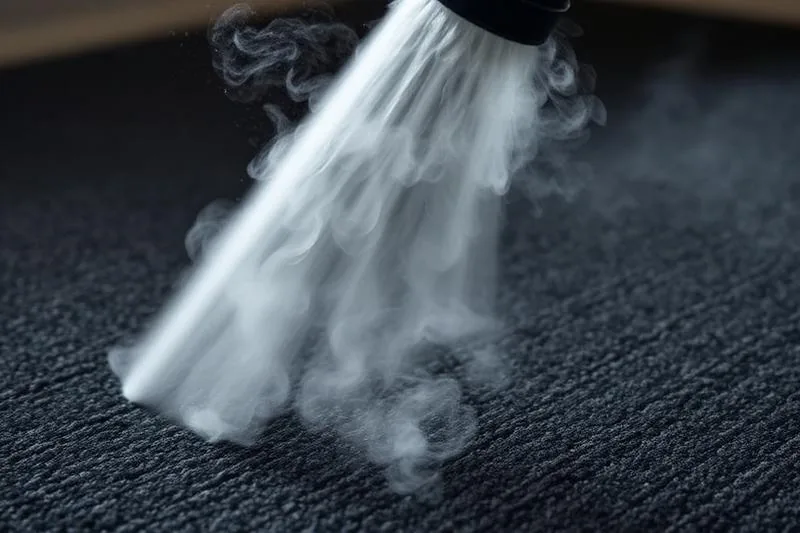
Professional hot water extraction — which most people call steam cleaning — works through a specific combination of temperature, pressure, and suction that home equipment simply cannot replicate.
The Science of Heat & Allergen Removal
- Dust mites: Killed at sustained temperatures above 130°F
- Allergen proteins: Begin to break down under heat, making extraction more effective
- Pet dander & mold spores: Heat disrupts their protein structure, loosening them from fibers
- Duration: Steam cleaning produces allergen reductions that persist up to 8 weeks — versus 4 weeks for vacuuming alone
Research published in peer-reviewed literature confirms that steam cleaning combined with vacuuming produces allergen reductions that persist for up to eight weeks post-treatment — significantly longer than vacuuming alone, which showed allergen levels returning to baseline within four weeks.
Why Truck-Mounted Systems Are in a Different Category
Not all professional carpet cleaning is created equal, and this distinction genuinely matters for allergen removal. If you've ever compared rental machines versus professional equipment, this is the core difference.
Truck-Mounted vs. Portable: The Numbers
- Water Temperature: Truck: 200–220°F+ | Portable: 150–180°F
- Vacuum Pressure: Truck: up to 200" water lift | Portable: ~90" water lift
- Dry Time: Truck: 4–6 hours | Portable: 12–24 hours
- Allergen Removal: Truck-mounted removes up to 97% of common allergens including dust mite proteins and pet dander
That temperature and suction combination isn't just about getting things cleaner. It's what makes biological contaminant extraction clinically meaningful. The faster dry time also directly reduces the risk of mold and mildew development in damp fibers.
The IICRC (Institute of Inspection, Cleaning and Restoration Certification) sets the training and standards that certified technicians operate under. When a technician arrives with IICRC credentials, they've been trained to understand the relationship between fiber type, soil composition, water temperature, dwell time, and extraction — because those variables determine whether you get clean-looking carpet or genuinely clean carpet.
The Michigan Factor: Why It Matters Here
Michigan homes — and especially homes in Howell, Brighton, Hartland, Northville, and the surrounding Livingston and Oakland County area — deal with specific environmental pressures worth naming.
- Heavy seasonal pollen: Oak, birch, and grass pollens are heavy in spring and early summer. They hitch rides on shoes, clothing, and pets and settle deep into carpet fibers. Once embedded, that pollen stays active as an allergen even after the season ends.
- Four-season humidity swings: Dust mites absorb moisture directly from the air — they don't drink water. When indoor relative humidity climbs above 50%, populations grow rapidly. When it drops in winter, they die but leave behind allergen-rich debris that continues to trigger reactions indefinitely.
- Persistent pet dander: Pet dander is among the most persistent indoor allergens. It's sticky, lightweight, and clings to carpet fibers in ways that make simple vacuuming largely ineffective at meaningful removal.
Professional extraction addresses all three simultaneously — it doesn't just clean what you can see; it depletes the biological reservoir that's been quietly compromising your air.
How Often Does This Actually Need to Happen?
Most carpet manufacturers require professional hot water extraction every 12 to 18 months to maintain the warranty — not because they want your money, but because it's the only method capable of removing what accumulates at depth. We've covered cleaning frequency in detail here.
For homes with pets, children, allergy sufferers, or heavy foot traffic, every 6 to 12 months is a more appropriate interval. The goal isn't a clean-looking floor — the goal is preventing the biological reservoir from reaching the point where the carpet stops filtering and starts releasing.
Signs Your Carpet Is Overdue for Cleaning
- Persistent morning congestion that clears when you leave the house
- Sneezing or eye irritation that worsens at home
- Pets scratching more than usual
- A lingering odor that persists no matter how much you vacuum
These aren't allergy coincidences. They're your carpet telling you something.
The Bottom Line
Your carpet is either working for your air quality or against it. Professional steam cleaning — done with proper equipment by properly trained technicians — isn't a luxury maintenance item. It's the only realistic way to reset the biological load that accumulates in carpet fibers over time and restore its function as an actual filter.
Clean-looking and clean-breathing are two different things. In 2026, more homeowners are starting to understand which one actually matters.
Ready to Reset Your Indoor Air?
JG's Carpet Cleaning & Water Restoration serves Howell, Brighton, Northville, Hartland, West Bloomfield, Novi, Ann Arbor, and surrounding Michigan communities. IICRC-certified technicians using truck-mounted hot water extraction systems.