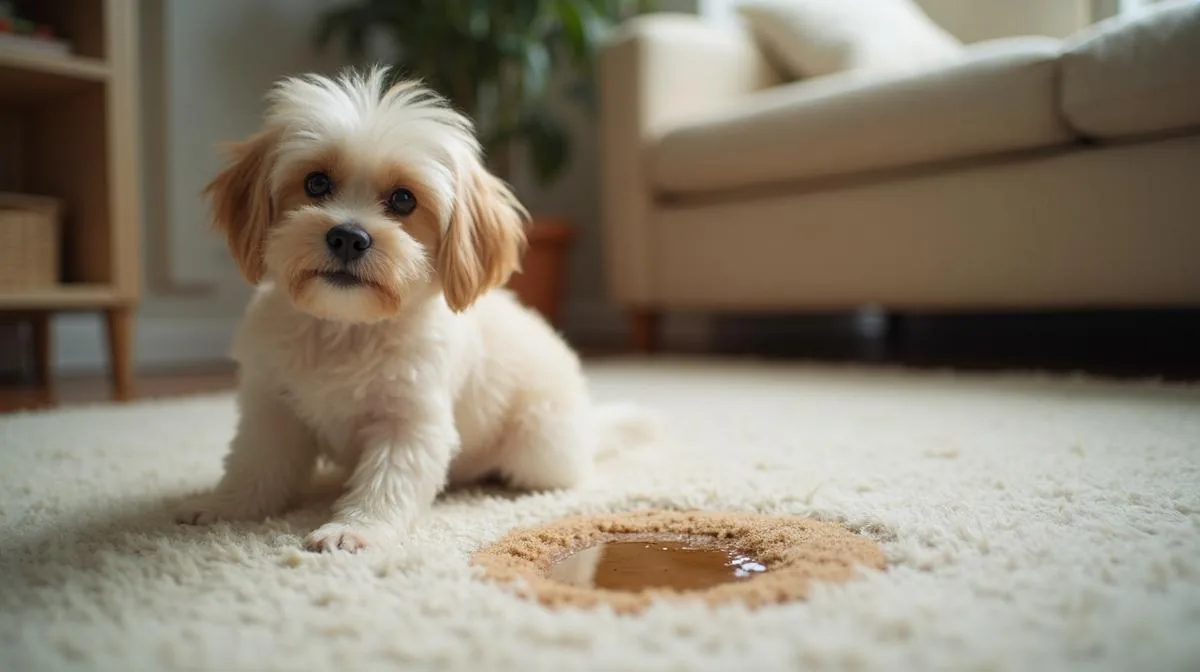
If you've cleaned that spot three times and it still smells every time the weather gets humid — you're not crazy, and you're not a bad cleaner. Pet urine is genuinely one of the hardest things to remove from carpet. Here's why, and what actually works from someone who's treated thousands of these spots.
Why the Smell Keeps Coming Back
When urine dries, it leaves behind uric acid crystals. Those crystals bond to carpet fibers and sink into the padding — and they're not water-soluble. Every humid Michigan summer day, those crystals reactivate and release the smell all over again. That's why the odor "comes back" months after you thought you'd beaten it.
Regular carpet cleaners, dish soap, and most grocery-store sprays can't touch uric acid crystals. They clean the surface and mask the smell for a week. The only thing that actually eliminates them is an enzymatic treatment — enzymes literally digest the organic compounds.
Fresh Accident (Happened in the Last Hour)
You can usually win this one yourself. Speed is everything:
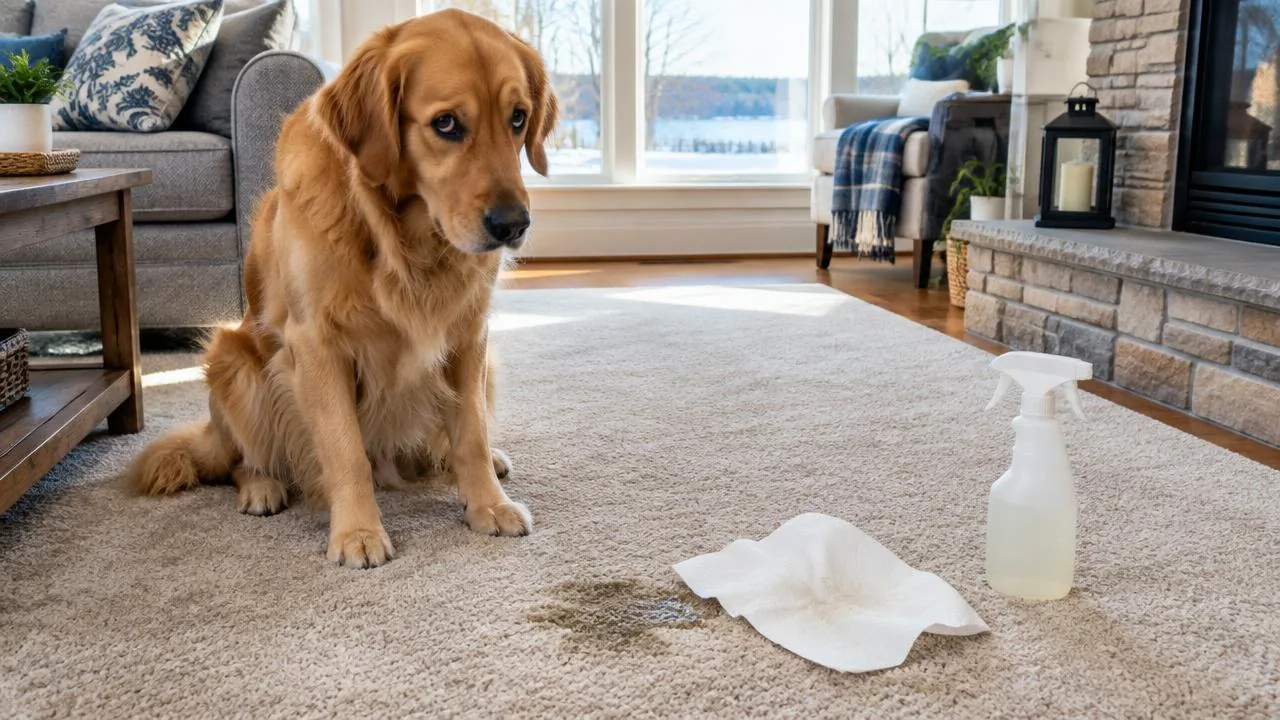
- Blot, don't scrub. Press paper towels or a white cloth into the spot with your body weight. Scrubbing spreads the urine and drives it deeper. Keep blotting until the towel comes up dry.
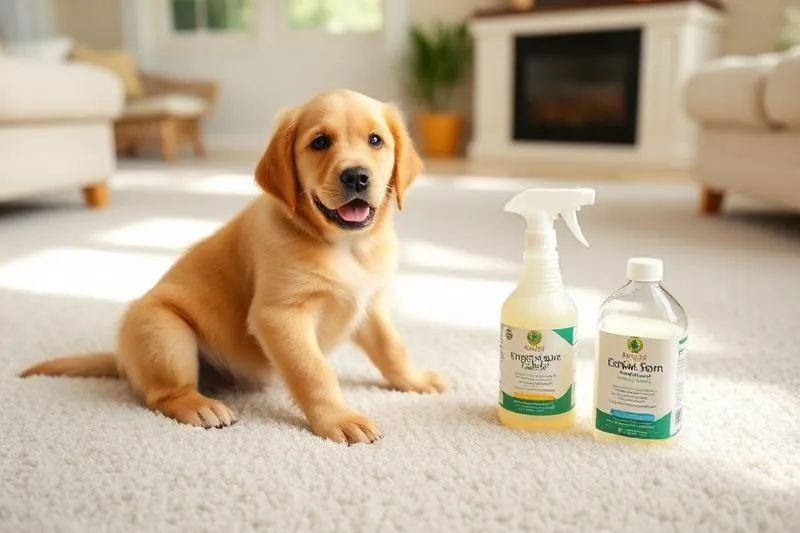
- Apply an enzyme cleaner — generously. You need enough to reach as deep as the urine went. A light mist on the surface won't do it. Follow the label's dwell time; enzymes need time to work.
- Blot again and let it dry completely. A fan pointed at the spot helps.
Three Mistakes That Make It Permanent
- • Steam mops and hot water on untreated urine — heat sets the proteins and odor into the fibers permanently. Enzyme first, always.
- • Ammonia-based cleaners — urine contains ammonia, and the smell can actually attract your pet back to the same spot.
- • Perfumed sprays — they mask the smell for you, not for your dog, whose nose is thousands of times more sensitive than yours.
Old or Mystery Spots: Find Them First
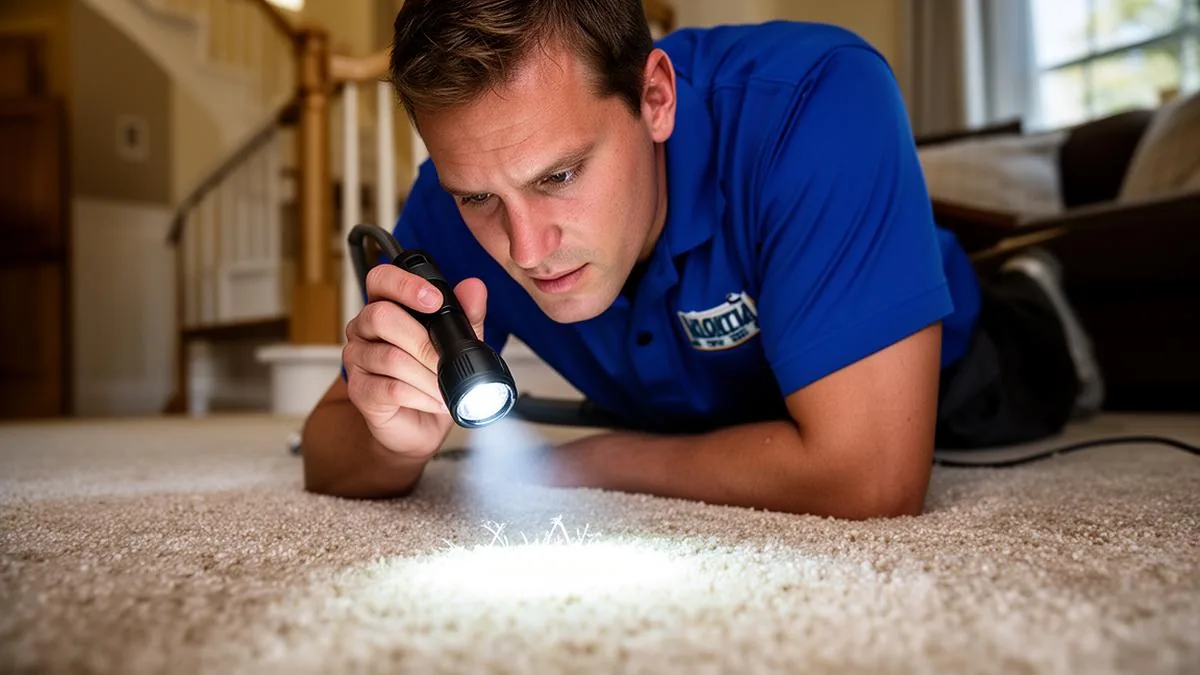
If the whole room smells but you can't find the source, get a cheap UV blacklight flashlight. Turn off the lights at night and scan the carpet — dried urine fluoresces a dull yellow-green. Circle what you find with painter's tape. Pet owners in Hartland and Pinckney call me after this step all the time, shocked at what the light reveals.
When the Problem Isn't the Carpet Anymore
Here's the honest part most articles skip: if a dog has used the same spot repeatedly, the urine has soaked through the carpet into the pad, and sometimes into the subfloor beneath it. No amount of surface cleaning reaches that. You can shampoo the top of that carpet every week and the smell will still win.
That's when you need professional treatment. We flood the area with an enzymatic solution, then use sub-surface extraction tools that pull the contamination up through the pad — the same approach we use for water damage, pointed at a different problem. Severe cases — usually years of repeated accidents in one corner — honestly need the pad replaced and the subfloor sealed. I'll tell you which one you're dealing with before we start, because I don't want your money for a treatment that can't work.
Quick Self-Test: Surface or Pad?
One accident, caught quickly? Probably surface — enzyme cleaner is worth a try. Same spot used multiple times, or a smell that survives every DIY attempt? It's in the pad. Save your weekends and call.
What to Expect If You Call Us
Every pet job starts with a UV inspection so we're treating the real spots, not guessing. Then enzyme treatment, sub-surface extraction where it's needed, and a full hot water extraction of the room. The cost depends on how many spots and how deep they go — call (517) 300-2445 or send a quote request and I'll give you a straight number before we schedule anything. We treat pet stains across Howell, Brighton, Fenton, and the whole service area every week — it's one of the most common calls we get.